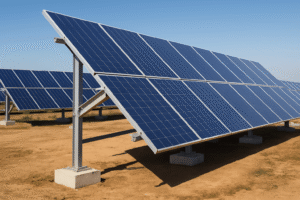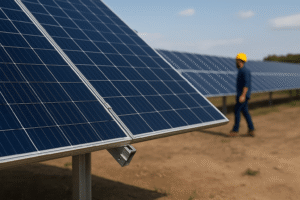
Ground mount in agricultural areas is now a key solution to generate solar power while optimizing land use. Farmers and businesses use this model to cut bills and create a new revenue stream.
However, this type of installation requires serious preparation. Soil selection, panel orientation, and compliance with local regulations are critical. Proper planning determines both the profitability and longevity of the project.
Foundations and site preparation
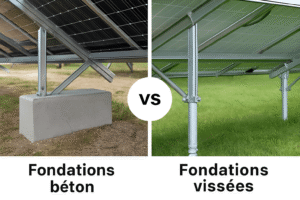
The first technical criterion for ground mount in agricultural areas is the choice of foundation. Stability depends directly on the soil profile.
- Screw-pile foundations: Easy to install, they reduce concrete use; they are more soil-friendly and limit environmental impact.
- Concrete foundations: More robust, they suit loose soils and provide better resistance to strong winds.
For more detail, see: Concrete vs screw foundations for ground-mount solar
A geotechnical survey is often required; it helps avoid costly mistakes. According to ADEME and industry practice, soil analysis increases the service life of the installation.
Next, plan site access. Farm machinery and trucks must move without issues. This logistical point is often underestimated, yet it dictates the speed and cost of works.
Panel orientation and tilt
Panel orientation is another critical factor for ground mount in agricultural areas. An incorrect tilt can significantly reduce energy yield.
As a rule of thumb, south-facing orientation is the most efficient. The recommended tilt is typically 25°–35°, but it must be adapted to the site latitude. A detailed solar study helps optimize production.
Shading must be minimized. Trees, greenhouses, and nearby buildings can affect performance. Therefore, an insolation/shading analysis is essential.
Some farms choose tracking systems. These structures follow the sun’s path; they provide more energy but require a higher budget and more frequent maintenance.
Compliance with agricultural regulations
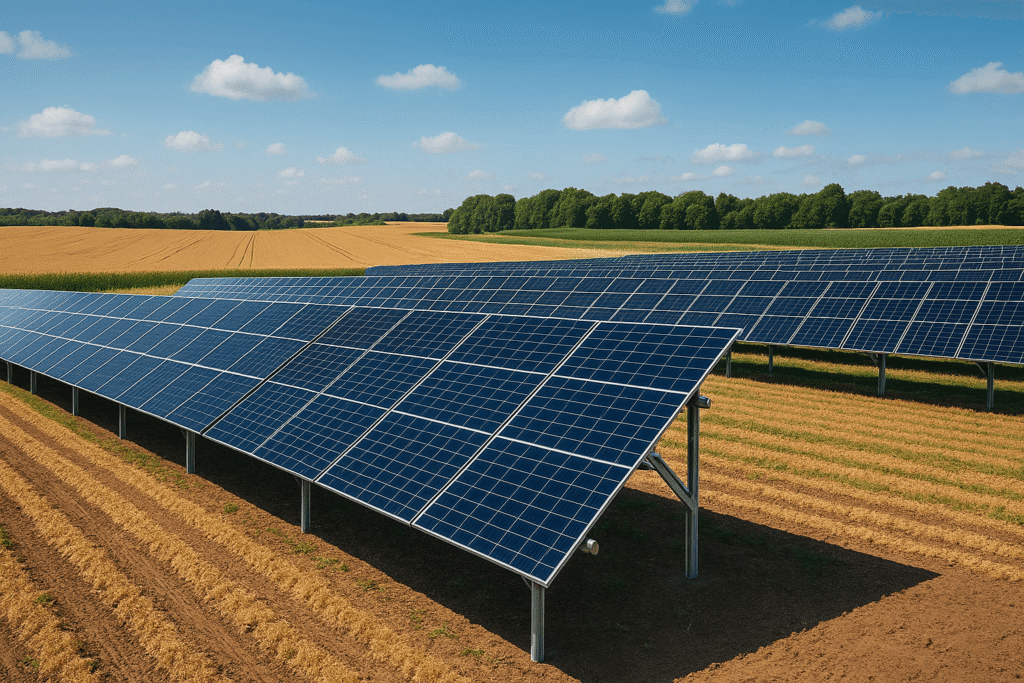
Installing ground mount in agricultural areas requires full regulatory compliance. Local authorities may impose strict rules.
- Panels must not block access to cultivated plots.
- Minimum row spacing is often required.
- In some cases, planning/building permits are mandatory.
Rules vary by region. The European Commission – Energy portal highlights the importance of checking applicable texts before investing. An administrative error can delay a project by months.
Also ensure biodiversity protection. A considerate installation integrates with the rural environment so agriculture and energy production can coexist without conflict.
Benefits for farming operations
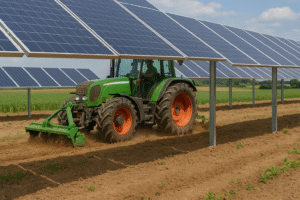
Ground mount in agricultural areas offers many advantages beyond clean energy.
- Lower energy costs
- Additional revenue via electricity sales
- Valorization of low-productivity land
- Active contribution to the energy transition
In addition, agrivoltaics is a strong trend that combines crops and energy. Panels protect plants from excessive sun and help create a favorable microclimate—boosting both productivity and sustainability.
Pre-project checklist
Before approving a ground mount in agricultural areas installation, verify:
- ✔ Feasibility of site logistics
- ✔ Soil bearing capacity and erosion risk
- ✔ Compatibility with existing crops
- ✔ Full compliance with local regulations
- ✔ Economic viability over 20–30 years
These simple checks help ensure a successful, profitable installation.
Projects for ground mount in agricultural areas require holistic thinking. Each step—soil, orientation/tilt, and regulation—shapes the outcome. With proper preparation, farmers can generate renewable energy while securing their income.
FAQ – Frequently asked questions
Is ground mount in agricultural areas suitable for all soils?
No. Rocky or unstable soils require more in-depth studies. Solutions exist, but they can increase the budget.
What is the average lifetime of a ground-mounted solar system?
Typically 25–30 years. Maintenance practices and material quality influence this lifespan.
Are permits required for ground mount in agricultural areas?
Yes. Most projects require administrative permits; rules vary by municipality and region.